Eyesight screening in school-age children may improve academic performance.
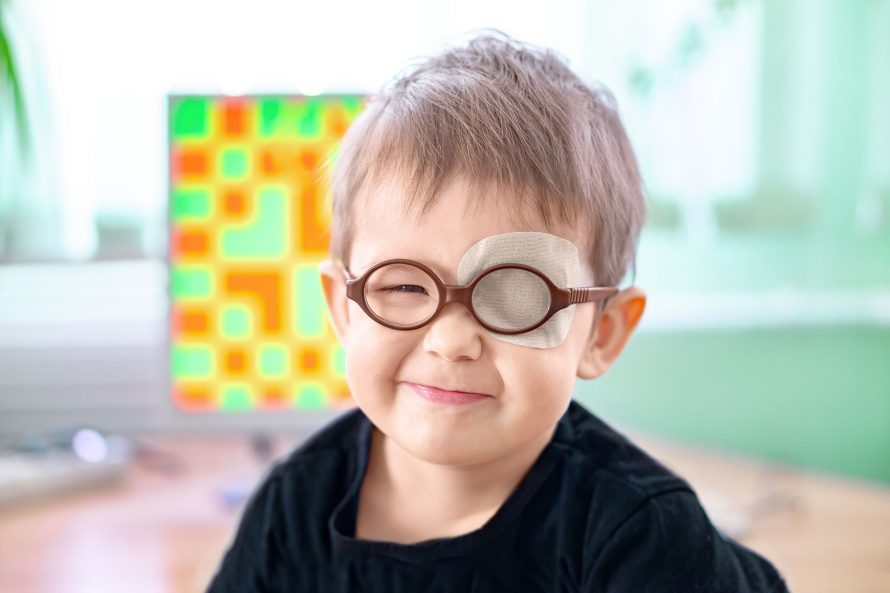
We know that eyeglasses may improve eyesight, but may they also improve the learning process?
Yes! What seems obvious has actually a positive populational answer supported by a scientific basis, according to a study developed with more than 2.000 elementary and middle school students in Baltimore City (USA) schools and published in September 2021 in the renowned journal JAMA Ophthalmology. This is the largest study ever made about eyesight programs implemented in United States’ schools that tried to answer the question: how does vison screening programs developed in schools affect the academic performance of students who need to wear eyeglasses? The study found out that the children who got free ophthalmological exams and eyeglasses as part of a school-screening program improved their academic performance after one year. The results suggest that such programs may help more students to be successful in school despite having vision impairment or limited access to healthcare.
The study authors have partnered with Vision for Baltimore, which provided free vision exams for students from 3rd to 7th grade in 127 city schools. Students with positive screening (namely, with possible pathology) subsequently got a complete ophthalmology consultation and, when needed, also got free eyeglasses from Vision to Learn mobile eye clinic.
The study revealed that, after one-year follow-up, students who got eyeglasses have improved their grades in reading tests. Likewise, elementary school students have improved their math grades. Eyeglasses offered a greater benefit to children who most needed it, including special education students and students with poor academic performance. Nevertheless, two years later, these improvements were not consistent. Researchers do not clearly present a unique reason for this discovery: a possible explanation relies on the need to keep child vision monitoring overtime as well as on replacing eyeglasses when indicated and according to individual growth. This will make a big difference in continuing to excel at school.
So… Why do children need screenings?
A healthy vision enables children to sharply focus objects at any distance. On the other hand, it enables to maintain a normal oculomotor balance, thus reinforcing the capacity of keeping attention and obtaining tridimensional vision.
Refractive errors may prevent or delay children’s visual development, consequently causing difficulties at school and later in adulthood. The most common refractive errors are myopia, hyperopia and astigmatism.
Sources: American Academy of Ophthalmology
Artigos relacionadas